What Three APNC Staff Took Home from Fall Conference
By Morgan Coyner
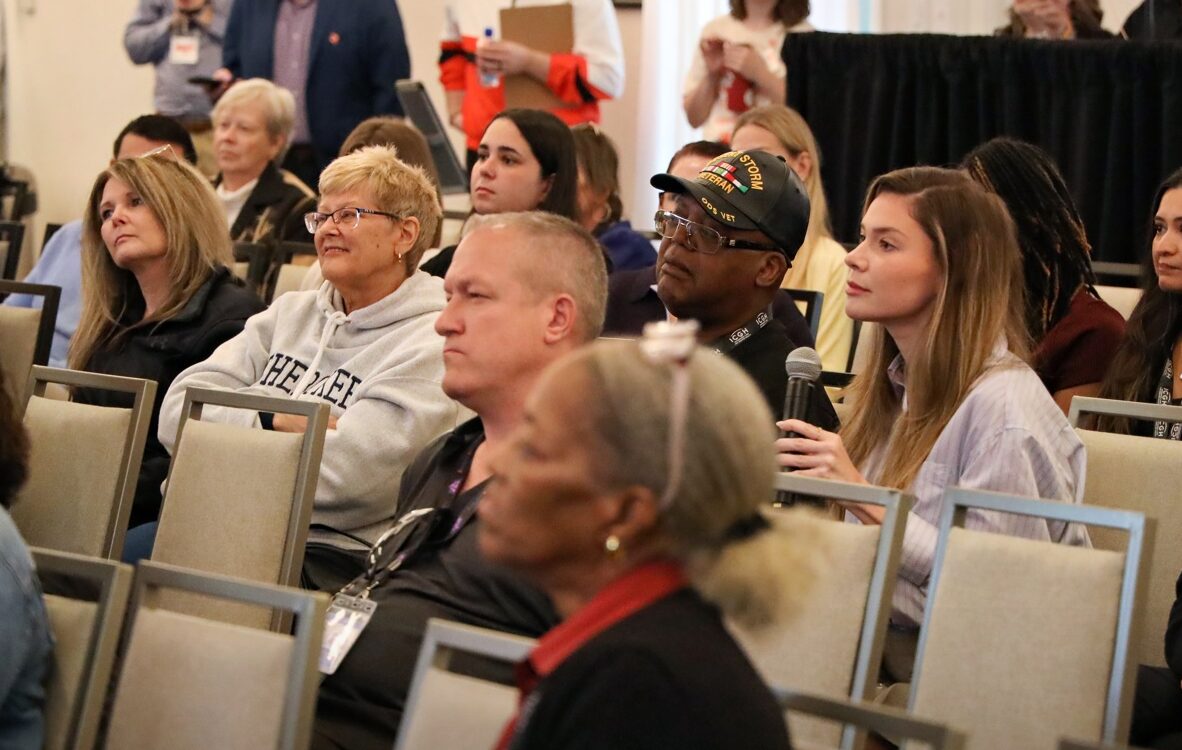
Every October, addiction professionals, advocates and students from across North Carolina spend two and a half days together at APNC’s Fall Conference. Most come for the CEs. Many leave with something more.
We asked three APNC staff members (a prevention coordinator, an accountant and a six-time conference veteran) what stuck with them this year.
Why some people don’t ask for help
Olivia Barefoot is APNC’s Collegiate Prevention Coordinator. The session she kept coming back to was Clint Malarchuk’s.
Malarchuk, a former NHL goaltender, spoke openly about trauma, addiction and the shame that kept him silent. Much of that shame came from what he believed a man was supposed to be.
“Malarchuk’s vulnerability made me think of the barriers young men in college face when they consider seeking help for substance use challenges. Experimenting with alcohol and other drugs during college has been so normalized within our society that students may fear rejection from their peers if they don’t participate in substance use. Fraternity brothers and male student athletes are particularly at risk of harm related to substance use, as these institutions closely link alcohol with masculinity. I think male college students would greatly benefit from positive male role models, like Malarchuk, demonstrating that vulnerability does not equate weakness, but rather seeking help is a brave and difficult task,” Barefoot said.
There’s no single road to recovery
Not everyone at the conference works directly with clients. Donna Semadeni is APNC’s Staff Accountant, and she was moved by Heather Locklear’s story of her own addiction and recovery.
Locklear talked about what women in recovery often need: a safe place to land, families who understand what’s happening, and people who stay around for the long haul.
“As a friend or family member, it is easy to want recovery for a loved one, but Heather reminded us that it is most effective when recovery is a personal choice.” Her takeaway is that recovery doesn’t follow one script, and support works best when it starts from the person’s real life.
A place to catch your breath
Aidan McGinty has been to six APNC conferences. As Communications Coordinator, he spends months helping plan each one, and he has watched what happens once people arrive.
“As much as it is an event for education and CEs, it becomes a refuge for practitioners, advocates, administrators, and students,” he said.
Semadeni felt that too. Behavioral health work can be isolating, she said, and a few days with people who understand it sends you back to work with more in the tank.
That’s what McGinty plans for. “I hope people leave the conference feeling less alone in their work and able to provide higher-quality care for their clients,” he said. “I hope they leave with a renewed sense of purpose.”
See you in Lake Junaluska
Spring Conference is April 20-22, 2026 at Lake Junaluska. Registration information is coming soon, so stay tuned! If you were at Fall Conference, reach out to us at @yourapnc